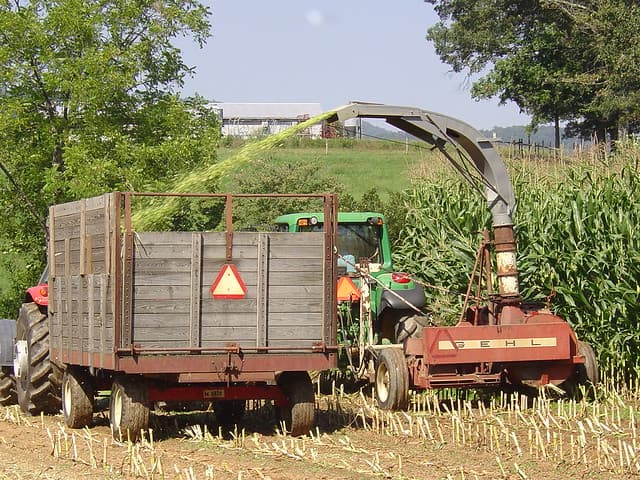
Why Do Some Silages Produce More Methane Than Others?
A Review of Forage, Fermentation, and Rumen Methanogenesis
Muhammad Ikram
M.Sc. Researcher, Department of Animal Science
Seoul National University, South Korea
Introduction
Methane (CH₄) emissions from ruminant livestock are of interest for two related reasons: they contribute to agricultural greenhouse gas output, and they represent a loss of dietary energy that would otherwise support animal production. Silage itself does not generate enteric methane directly. Rather, its chemical composition, digestibility, and fermentation profile shape the activity of rumen microorganisms and the fermentation pathways that ultimately determine how much methane is formed. As a result, two silages included in the diet at similar rates can still produce noticeably different methane responses once consumed by the animal.
This article summarizes the main biological and nutritional factors that help explain why silages differ in their methane-related outcomes, drawing on in vitro and in vivo evidence from the peer-reviewed literature. Figure 1 provides a conceptual overview of these relationships before each factor is discussed in more detail.
How Methane Is Produced in the Rumen
A common misconception is that methane is generated inside the silage itself. In reality, enteric methane is produced mainly in the rumen by methanogenic archaea. During microbial fermentation of feed, hydrogen is released as a by-product of carbohydrate breakdown. Methanogens use this hydrogen, together with carbon dioxide, to synthesize methane, which is then eliminated primarily through eructation.
Silage therefore influences methane formation indirectly, by shaping the substrates available for fermentation, the extent and rate of fiber digestion, the pattern of volatile fatty acid production, and the composition and activity of the rumen microbial community. Any silage characteristic that alters these processes has the potential to alter methane output.
Figure 1. Conceptual overview of how silage characteristics can influence rumen methane formation. This diagram was created by the author to summarize relationships discussed in van Gastelen et al. (2015), van Gastelen et al. (2023), and Li et al. (2023); it is an original illustration and was not copied from any published figure.
Why Silages Differ in Methane Production
Because methane formation depends on rumen fermentation rather than on the silage itself, differences in methane output between silages can generally be traced back to differences in forage species, stage of maturity at harvest, fiber and lignin content, digestibility, fermentation quality, and, in some cases, the use of microbial inoculants during ensiling. The following sections examine each of these factors in turn, along with the specific evidence available for each.
Effects of Forage Type, Maturity, Fiber, and Digestibility
Grass silage, corn silage, alfalfa silage, and other conserved forages differ in their fiber, starch, crude protein, lignin, and digestibility characteristics. These compositional differences can shift the pattern of rumen fermentation and, in turn, the amount of hydrogen available for methanogenesis. In a controlled dairy-cow study, replacing grass silage with corn silage as the sole roughage source reduced methane yield from 24.6 to 22.0 g CH₄/kg dry matter intake as the diet moved from 100% grass silage to 100% corn silage. However, the intermediate diets did not show a strictly linear decline, indicating that the methane response depends on the composition of the entire diet rather than on forage identity alone (van Gastelen et al., 2015). This relationship is illustrated in Figure 2.
Figure 2. Methane yield of lactating dairy cows as grass silage was progressively replaced by corn silage in the diet. Values were redrawn by the author from numerical data reported by van Gastelen et al. (2015); the chart is an original recreation and not a reproduction of the published figure
As forage matures, neutral detergent fiber content and lignification generally increase, while digestibility tends to decline. Fermentation of highly fibrous material commonly favors acetate production and releases additional hydrogen that methanogens can use. Even so, lower digestibility does not automatically translate into lower daily methane output, because intake, rumen retention time, and animal productivity also influence the overall response. For this reason, methane is best reported not only in absolute terms (grams per day) but also relative to dry matter intake or milk output, since these measures can move in different directions.
This distinction is evident in a 2023 dairy-cow study, in which a corn-silage-based diet reduced daily enteric methane output from 413 to 369 g/cow compared with a grass-silage-based diet, while methane emitted per kilogram of fat- and protein-corrected milk remained unchanged at 13.4 g/kg. This result underlines the importance of selecting an appropriate emission metric when evaluating a feeding strategy (van Gastelen et al., 2023).
Role of Silage Fermentation and Microbial Inoculants
Effective ensiling preserves nutrients, restricts undesirable fermentation, and supports stable feed intake, all of which can influence subsequent rumen digestion. Dry matter content at ensiling also affects both the fermentation process within the silo and the digestive response once the silage is fed. In an in vitro study of alfalfa silage, methane production differed between moderate- and high-dry-matter silages, and the effect of a microbial inoculant was not consistent across the two dry matter levels. This interaction suggests that the same inoculant may not perform equally across different forages and ensiling conditions (Li et al., 2023).
Microbial inoculants are used primarily to improve silage fermentation and aerobic stability, but some strains may also alter the pattern of rumen fermentation after the silage is consumed. Li et al. (2023) reported substantial reductions in in vitro methane production from alfalfa silage treated with two bacteriocin-producing Lactiplantibacillus plantarum strains. These findings, however, were generated in an in vitro system and should not be interpreted as direct evidence of an equivalent reduction in live animals. In vivo validation, consistency of dosing, applicability across forage types, and confirmation of the animal response remain important research needs, as summarized in Table 1.
The evidence discussed above is summarized in Table 1, which lists the forage or diet comparison, animal or sample type, experimental system, methane outcome, and main finding for each study, with in vitro and in vivo results clearly distinguished.
Table 1. Selected studies on silage type, fermentation, and enteric methane production.
Reference | Study Type | Forage / Diet Comparison | Animal / Sample | Methane Result | Main Finding |
van Gastelen et al. (2015) | In vivo | 100% grass silage to 100% corn silage as roughage source | 32 lactating Holstein-Friesian dairy cows | 24.6 to 22.0 g CH₄/kg DMI (≈11% lower) | Forage substitution changed methane yield, but intermediate diets were not strictly linear. |
van Gastelen et al. (2023) | In vivo | Grass-silage-based vs. corn-silage-based diets | 64 lactating dairy cows | 413 vs. 369 g CH₄/day; 18.1 vs. 16.4 g/kg DMI; 13.4 g/kg FPCM (unchanged) | Daily emission and methane yield declined, but methane per kg corrected milk was unchanged. |
Li et al. (2023) | In vitro | Control vs. two bacteriocin-producing L. plantarum inoculant strains | Alfalfa silage, two dry matter levels | Reported reductions of 43.9–78.6%, depending on strain and silage DM | Promising laboratory evidence; confirmation in live animals is still required. |
Note. CH₄ = methane; DMI = dry matter intake; DM = dry matter; FPCM = fat- and protein-corrected milk; L. plantarum = Lactiplantibacillus plantarum. In vitro and in vivo results are reported separately and should not be compared as if drawn from a single experiment.
Current Research Limitations
The studies summarized in Table 1 should not be treated as if they came from a single, unified experiment. They differ in the animals or systems used, the diets and forage proportions tested, the dry matter content of the silages, and the methods used to measure methane. In vitro reductions are particularly useful for screening possible mechanisms, but they often overstate the certainty of an effect once it is placed under farm conditions. A balanced interpretation is that silage characteristics may influence methane production, but the size and direction of that influence depend on the complete feeding system, and further in vivo research is required before findings from laboratory systems can be generalized to grazing or housed livestock.
Practical Implications
Improving silage quality remains valuable in its own right because it supports nutrient preservation, feed intake, animal performance, and overall production efficiency. Any accompanying reduction in methane should be regarded as an additional benefit rather than the primary justification for a management change, and it should not be evaluated separately from effects on digestibility and productivity. Where methane mitigation is a stated goal, the available evidence suggests that outcomes should be interpreted using more than one metric — for example, methane yield per unit of dry matter intake alongside methane intensity per unit of milk or liveweight gain — since a favorable result in one measure does not guarantee a favorable result in the other.
Conclusion
Methane is formed in the rumen, not in the silo, but silage composition and quality have been associated with meaningful differences in methane outcomes through their effects on substrate supply, fiber digestion, and rumen microbial activity. Forage species, maturity, fiber content, fermentation quality, and microbial inoculants may all influence methane yield and intensity, though the direction and size of these effects vary across studies and measurement systems. Future research combining well-characterized silages, reliable fermentation measurements, rumen microbiology, and in vivo methane measurements will be needed to identify silage management strategies that are both biologically effective and practical for farmers.
References
Li, Z., Li, F., Akhavan Kharazian, Z., & Guo, X. (2023). Effect of inoculating two bacteriocin-producing Lactiplantibacillus plantarum strains at ensiling on in vitro rumen fermentation and methane emissions of alfalfa silage with two dry matter contents. Animals, 13(3), 384. https://doi.org/10.3390/ani13030384
van Gastelen, S., Antunes-Fernandes, E. C., Hettinga, K. A., Klop, G., Alferink, S. J. J., Hendriks, W. H., & Dijkstra, J. (2015). Enteric methane production, rumen volatile fatty acid concentrations, and milk fatty acid composition in lactating Holstein-Friesian cows fed grass silage- or corn silage-based diets. Journal of Dairy Science, 98(3), 1915–1927. https://doi.org/10.3168/jds.2014-8552
van Gastelen, S., van Dooren, H. J., & Bannink, A. (2023). Enteric and manure emissions from Holstein-Friesian dairy cattle fed grass silage-based or corn silage-based diets. Journal of Dairy Science, 106(9), 6094–6113. https://doi.org/10.3168/jds.2022-22378